
All my video content can be found here. Stay up-to-date. Like, write fanciful comments, and subscribe.

All my video content can be found here. Stay up-to-date. Like, write fanciful comments, and subscribe.
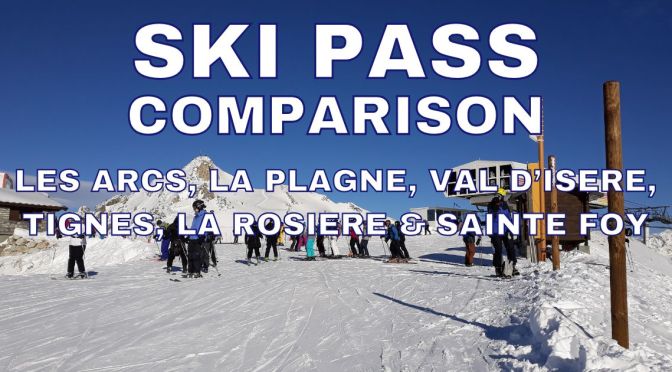
There is a huge variety of ski passes available across different ski domains and the pass which might be best for you is not necessarily the ‘6 day’ standard. This is a very basic comparison of the most popular ski passes in the most popular resorts in the Tarentaise: Paradiski (Les Arcs & La Plagne), Val d’Isere/Tignes, Sainte Foy and La Rosiere. For more information, and options, check out the specific pages for each ski resort (links below).
| Ski Area | 1day adult | 1day child | 6day adult | 6day child | KM pistes | Over 2000m |
| Paradiski (Les Arcs & La Plagne) | 74 | 60 | 389 | 312 | 425 | 70% |
| Les Arcs | 68 | 55 | 348 | 279 | 200 | 70% |
| La Plagne | 68 | 55 | 348 | 279 | 225 | 70% |
| La Rosiere (San Bernardo pass) | 57 | 43/ 51.5* | 289 | 217/ 260* | 154 | |
| Tignes & Val d’Isere | 71 | 59 | 426 | 354 | 300 | 60% |
| Sainte Foy | 40 | 36 | 240 | 216 | 43 |
This is just a very basic table and, as mentioned, there are a variety of factors which affect (and complicate) even these basic ski pass prices…
Ski resorts do not have a standard age range when it comes to classifying a person as a child. This means that visiting certain domains is more cost-effective depending upon the age of your child(ren). In Paradiski (both Les Arcs and La Plagne), and in La Rosiere, the reduced rate for children applies to kids between 5 & 12 years old. Under fives get a free pass. Sainte Foy considers children to be aged 8 to 14 years old (under 8s go free). Tignes & Val d’Isere are somewhat exceptional in that ‘child’ covers 8 to 18 year olds, meaning you only have to pay full price once you hit 19!
Whilst the Val d’Isere/Tignes child classification would seem to be cost effective for teenagers, the “reduced” price is more expensive than an adult price for Les Arcs, so you’re actually still spending more money. The real benefit with Val d’Isere & Tignes is when you have lots of kids aged 7 or under, as they are effectively getting a free ski pass… which goes a little way to ameliorating the increased adult price you will be paying (plus the general common expenses associated with staying in Tignes or Val d’Isere).
Similarly Ste Foy’s beneficial age shift can reduce overall cost, although Ste Foy is simply a cheaper option anyway.
Because a 6 day pass is essentially the industry standard (skiers generally stay for a week), some ski passes have “bonus time” on their 6 day passes, to entice you to ski the day you arrive (or leave). The full Paradiski 6-day pass gives you a free afternoon (half day) on the day before your ski pass starts (essentially allowing you to start your holiday early, but not finish late). The full Tignes / Val d’Isere pass gives you a full seventh day (you effectively cannot buy a 6 day pass, you can either get 5 days, or 6+1). It’s the same at Sainte Foy: you pay for six days, you get seven days. These offers are great if you have the time within your travelling schedule to use them (particularly useful if you are driving or getting an early (on arrival) or late (on departure) ski train). There are no freebies in terms of time at La Rosiere.
Going from the figures alone, you get a lot of kilometres of piste per euro in Paradiski, whereas the lower price of Ste Foy gives you only a limited area in which to ski (although the proportion of off-piste available is significant!) Other than the size of the area, you might be considering altitude as a key factor in choosing a ski resort. However, on both these points, the numbers are not the “be all and end all.”
Paradiski is HUGE and, in a week, it’s pretty difficult (and only questionably worthwhile) to cover the whole domain. This can be exacerbated by where you choose to stay; the full Paradiski area is much more accessible from Peisey-Vallandry or Montchavin (which are close to the adjoining Vanoise Express gondola), than from Montalbert or Villaroger (at the far ends of La Plagne and Les Arcs respectively). The situation is similar in Tignes/Val d’Isere as, whilst it doesn’t have a one-gondola connection between the two main domains, it is quite linear, making getting from one end to the other quite an endeavour. Another thing to consider is snow, as heavy snowfall can make getting about less straightforward (due to trickier conditions and closed lifts). Also, heavy snow makes it more sensible to stay in one place to enjoy the fresh powder, rather than try exporing in sub-optimal conditions. For most people there is therefore a limit to how many kilometres of piste you actually NEED.
Another thing is off-piste. Sainte Foy may not have a lot of groomed pistes compared with the others, but it has a high proportion of adjacent, accessible (and often underused) off-piste. So if off-piste is your thing, the KM of groomed runs on any given ski area may mean next to nothing.
Lastly, altitude. It can be important, but sometimes it’s not. If it’s snowing everywhere, at all levels, then it can be more important to be in a place with enclosed lifts which are not exposed to high winds and a good proportion of tree runs. In late season, it can better to be on the lee-side of the mountain (away from the sun), than at a higher altitude. Finally, people have a tendancy to “get high” meaning these areas are often the busiest and that there is actually more fresh snow to ride lower down.
The Sainte Foy online prices have traditionally been somewhat ‘dynamic’ meaning some days/weeks are cheaper than others. The prices displayed in the table above are the most expensive, but you’re really only ever likely to save a couple of euros per day on the standard dynamic prices.
Saturdays are often cheap, so if you just want to add on a day in your chosen resort, that can be a cost-effective way of doing so. Sometimes you have to book in advance (the day before) or specifically online (maybe with a code), but find out beforehand and you’ll be well equipped for some last-minute pow.
Also, it can be simply cheaper to book online and some ski resorts (mostly outside of the Tarentaise in my experience) can put up short-term deals at times.
As mentioned at the start, a 6 day pass might not be for you. It may be cheaper (and more flexible) to pay as you go (PAYG) or pick and choose which days (and even ski areas) you ride as you go along. There are even cross-resort single ski passes (like ski a la carte) which let you ride where you like at maximum convenience. It’s always best to check out all your options before you head out to the mountains.
Last updated: 23rd November 2024
What is on in Les Arcs this winter? Well I will try to keep this page updated. It’s a fairly lo-fi way of making a calendar of events, but hopefully it is effectively and, at least, gives some background as well as simply stating “What’s On.”
First tracks or La Premiere Montee des Arcs is the first (official) opportunity to ski the pistes of Les Arcs. Starting with a hot drink at hte Pre Saint Esprit lift on the way up to Arc 2000 at 10am, followed by a quick safety briefing, it is a great opportunity for lovers of ski-touring to ‘skin up’ and take a supervised hike up the mountain for the freshest tracks of the season. An evenement solidaire, this event cost €5 with the money effectively going to charity. After a 5km march up to the Col de la Chal, taking in about 700m of ascent, you ski back down for a little bit of lunch. All details are here.
The lifts open! Les Arcs is ready for skiing on Saturday 14th December and whilst it traditionally takes a few days for all the lifts to open (and even more for all the pistes to be fully rideable) it seems there is a strong planned start to the season with the Vanoise Express connecting La Plagne to Les Arcs from the first day and the brand new, very-slightly redirected Transarc due to open the same day in Arc 1800. The excitement is always tangible.
Coinciding with the opening week of the ski season, the Les Arcs Film Festival (previously the festival de cinéma européen des Arcs) was founded in 2009 and has rapidly become one of the leading lights celebrating European independent cinema (it has even been described as a “European Sundance” by Variety magazine!) Showcasing a wide variety of feature and short films across multiple locations in Les Arcs, the festival not only awards excellence and innovation, but aides further development through an industry village, workshops and events which bring together the “movers and shakers” from the world of European film. With passes available allowing unlimited viewing for the whole week from €38 (€34 for ‘early bird’ buyers), weekend passes for only €16, and tickets for individual showings on sale, the film festival is a great way of enjoying great cinema and great snow in the same place.
Bourg Saint Maurice Christmas Market starts on the Friday evening and lasts all weekend. There are offerings from various local artisans and a variety of events occuring (the arrival of Father Christmas at 15:30 on Saturday probably the highlight).
Once again Father Christmas will be visiting the centre of Bourg Saint Maurice, following a festive, musical parade through its hyper-centre. Just a few steps from the train station and a short walk from the bottom of the Arc 1600-connected funiculaire. Hot chocolate abounds.
Fireworks in Bourg Saint Maurice, at the top fo the Grand Rue, and you don’t even have to stay up late. Early evening celebrations at 18:30.
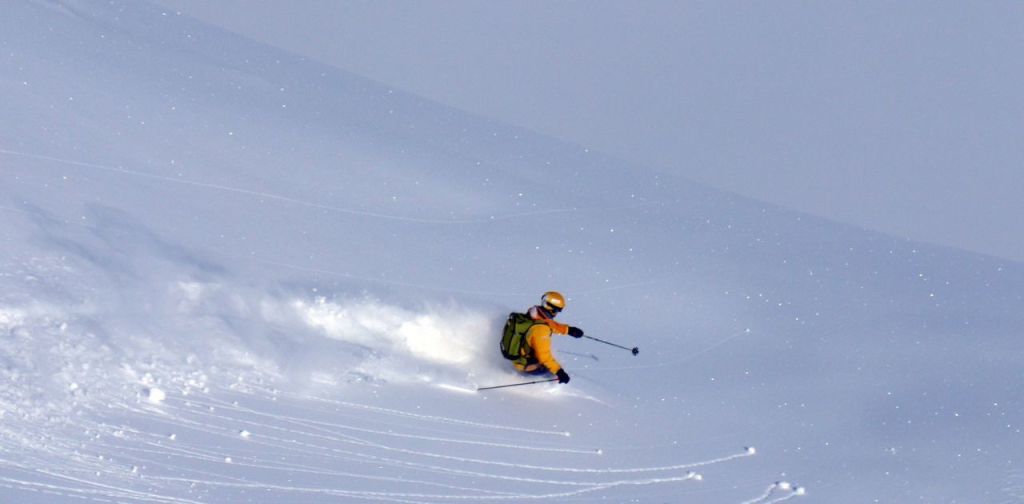
Freeride Week in Arc 1950. This includes the Freeride World Qualifiers (ranked from 2* to 4*). On Saturday 18th the kids are up, with the Junior Tour seeing 14-18 year olds riding crazy lines off-piste around the Arc 2000 bowl. The 20th sees the 2* Qualifiers, with the 22nd being scheduled for the high-end 4* riders. If weather gets in the way of the scheduled rides, the additional days between 18th and 24th are reserved to ensure the competition is completed.
Try biathlon with laser rifles in Bourg Saint Maurice. From 14:30 to 17:30, it’s free, fun and suitable for everyone over the age of 8 years old.
Fanfare Express outdoor gig in Bourg Saint Maurice. Part of the weekly Thursday evening market/music combinations. Inspired by American brass band sounds like Lucky Chops, you can expect upbeat, party jazz from 17:30 to 18:30.
Arkad outdoor gig in Bourg Saint Maurice. Part of the weekly Thursday evening market/music combinations. This time it’s good old-fashinoned rock-pop-hip-hop… from 18:00 to 19:30. Expect hot chocolate and marshmallows with your music.
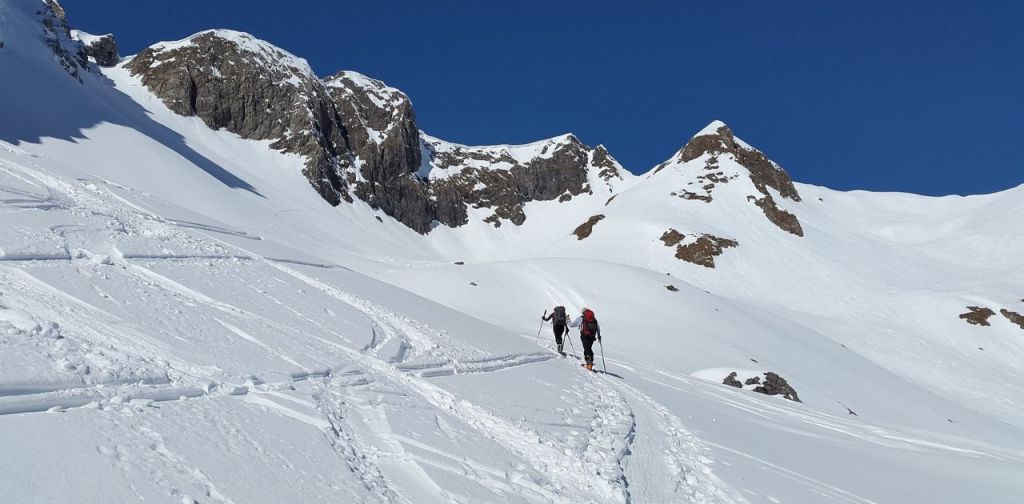
La Belle Aventure is another opportunity for those crazy people who like to hike up a mountain before skiing back down it to fulfill their sick desires…. this time at NIGHT! Put on your touring skis, skins and a headtorch (and, presumably, some clothes) and meet at the snowfront in Arc 1800 at 18:00 for a “very enjoyable” march up to the Arpette restaurant, before skiing back down again around 21:00. Certainly a variation on fun.
Proving that you don’t have to be a skier/snowboarder to do absurd physical things on mountains covered in snow, the Star Trail is an 11km run incorporating about 500m of ascent starting and finishing in Arc 1800. Fortunately, in the recent past, the traditionally near-ubiquitous requirement for a Medical Certificate to do any sort of organised running in France has been replaced with a simple-to-complete 5-minute online course. This means it is genuinely open to everyone. Race starts at 18:00, and it’s only €7 if you book in advance. I might well see you there…

Electronic Peak Festival. Ski in the day, party all night. Centred around Arc 1800, there are a handful of apres-ski events across the mountain. On Monday night, there’s a late showing at the Folie Deuce just above Arc 1800 (’til midnight) with Miley Serious, Why Why Why and Baume. The bulk of the action happens on the Thursday and Friday nights at the Centre Bernard Taillefer with pure electronica (and a roller disco) rolling onto 2am and 3am respectively. Here’s the official website for tickets, line-ups and ‘that.’
Winter Festislack is a festival of slackline. This is yet another thing I only vaguely understand. It’s like tightrope walking, but the rope is not tight (it’s slack) and it’s not a rope (it’s more like a strap). You might see people hooking one up to some adjacent trees and then walking across it at various levels of elaborateness. Few details are available at the moment, but it happens every year, so you can expect it to be pretty organised. People seem to enjoy it.
One of the silliest things to happen in this perpetually-insane mountain area, La Montee du Funi is effective a 6 hour footrace from the bottom to the top of the funi. Repeatedly. Bourg Saint Maurice to Arc 1600. 817 metres of climb over 5.1km. Over and over again. For 6 hours. If you like trail running and going uphill and endurance and physical discomfort and intermittent downhill rides in a funicular, you will LOVE this. You run up, you take the funi down, then you run up again… forever. It currently looks like you will need a medical certificate for this one (presumably to check you’re sufficiently mentally ill).
Whilst XIST aims to be a one-stop hub of all kinds of information, Rome was not built in a day. I have decided to soft-launch the website, as it contains some relevant and recent information, but not all sections are fully operational.
Like British roadworks, German airports and Ephyran boulder removal, this is likely to take a while and be seemingly out of anyone’s control. For that, I apologise.
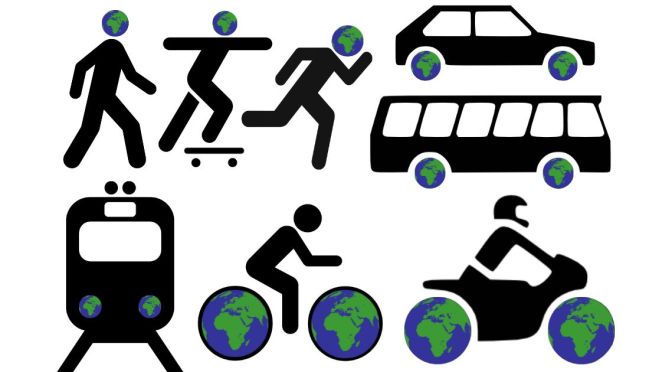
Humans are moving all the time. Unfortunately, we seem to be pretty inefficient when it comes to moving ourselves about. One good example is cars. Oftentimes, when we want to go from A to B, we consider the most straightforward means to involve taking over a tonne of metal, plastics, rubber, electronics and soft furnishings with us. This has all been made possible by the internal combustion engine. Because we can move a huge amount a material with no effort, people have become insensible to the fact that using massive vehicles to carry individual human beings (which might weigh less than 5% of the overall load) is MADNESS! Obviously the degree of madness is variable according to where a person is going, what (or who) they need to take with them and multifarious other factors (weather conditions, terrain, personal physical condition, etc). Still, the fact remains, that cars are very rarely the most efficient way of travelling from one place to another.
People are not going to stop moving, so I thought it might be interesting to compare forms of transport to figure out which one’s are the most efficient and effective (in terms of environmental impact, cost and time).
Walking and running are as close to zero-emission as I think we can get. The main factors with environmental impacts are probably calories-burned (as increased exercise requires increased calorie-intake) and the comparably-insignificant materials used (namely footwear and attire). The carbon-footprint of your calorie intake depends on a lot of factors (where you live, what you eat, how you source it, etc) which we’re not going to explore here (hopefully in the future), but I think it’s worth noting that “calories burned” is the main environmental consideration when it comes to travelling ‘on foot.’ Technically, it seems running uses more calories per kilometre than walking, but it is faster and, fairly obviously, the degree of difference depends on how fast you are walking (or how slowing you’re running). Also the amount of calories used should be compared to how many calories you would have used anyway during the travel time (through just existing)
Walking/Running carbon footprint : 0.013kg per KM (taken from this blog. There are lots of numbers out there but this seems a reasonably reliable indication).
Speed: Walking approx. 6km/h. Running approx 12km/h. This is clearly very dependant on things like personal fitness, terrain, elevation and overall distance travelled.
Range: I’m not going to put a figure in here. Theoretically, most people could (and arguably do) walk or run indefinitely, with breaks for food, sleep, etc.
Other environmental impacts to consider: Wear on footwear and attire necessary for walking/running in a variety of conditions (unless you live where it’s always sunny, like California USA, or always raining, like Manchester UK). Manufacturing and distributing things, like trainers and clothes has a measurable impact, as does disposing of these things when they get all worn out.
Cycling is an incredibly efficient way of getting around. Whilst there is the added weight of a bicycle to consider, this should only be a fraction of the weight of the rider (my 20+ year old road bike only weighs about 11kg, so probably less than 1/7th of my own weight). However, the addition of the bike as a smooth and efficient mode of transport reduces calorie intake over walking or running whilst increasing speed. Cycles are wonderful inventions and which really maximise the speed and range of human-powered travel whilst reducing impact on the body. Furthermore, you can get racks, luggage, trailers and specific cargo-carrying bikes to make them more practical for carrying stuff. In terms of transporting additional small people, you can get child-seats and buggy trailers. You can also improve efficiency by riding a tandem (reducing ‘drag’) or simply by drafting another rider.
Cycling carbon footprint : 0.006kg per KM (again based on increased-calorie-burning, taken from here).
‘Lifetime’ carbon footprint (taking into account the manufacture (etc) of the bike): 0.021kg per KM
Speed: 20 – 25km/h. This can be considerably quicker, especially when riding in a group.
Range: Limitless, but it really depends how much of your day you want to spend on a bike.
Other environmental impacts to consider: Manufacture of bike and wear on components (tyres, chain, sprockets, brakes, etc). The lighter you, and your equipment, are, the less energy used, therefore reducing excess weight, both personally and in terms of bike equipment increases efficiency.
There are other ways of getting around which require an amount of human input. Cross-country skiing, ski- or splitboard-touring are particularly prevalent in some areas during the winter. Outside of snowy areas, people may also use scooters, skateboards, rollerskates or rollerblades, amongst other things, to travel about. As with running, walking and cycling, the primary environmental impacts will be calories burned and equipment wear. Also, similar to the above, the environmental impact is going to be relatively low.
Insofar as single-person electric vehicles reduce reliance on cars (fossil fuel-burning and othewise) they must probably be considered a good thing. Also, where the electricity used is sustainable (from hydroelectric or wind-power for example) there is a definite benefit when compared to diesel, petrol or LPG vehicles. However, it is important to recognise that there is no such thing as ‘free electricity’ and even the most sustainable electricity supply requires a huge amount of infrastructure to operate (which has its own carbon footprint), there is always wastage with electricity and any ‘green’ electric being use to power vehicles is not being used elsewhere. Another problem with electric vehicles is batteries. No battery is 100% efficient (various figures suggest a loss of 20% when charging a battery) and they have a significant environmental impact when being produced and, at end-of-life, (hopefully) recycled. Batteries can also be affected by cold weather (reducing range dramatically as the temperature drops), which can be a consideration.
Electric scooters have become very popular, particularly in urban areas (where they are allowed). They are fairly compact, and let people whizz about, door-to-door, with great ease. You don’t need to change your clothes (even in slightly inclement weather) and, with some scooters, give even give a lift to friends. Unfortunately, having done some research, they seem to be ‘not the best.’ In line with other electric vehicles, the carbon footprint of the manufacturing process is quite high for such a small thing. Also, compared to traditional types of public transport (tram, bus, train), they are quite inefficient. I thought that you may be able to improve efficieny by using them partially- or entirely-manually (essentially kicking oneself forward like with a traditional scooter) but that seems to be very difficult to do with most scooters. Hence the electric scooter is an additional, fairly heavy piece of hardware (usually between 10-30kg) that is often only effective when powered entirely by electricity. They are better than cars for one person, because they are smaller, but work in a very similar way.
Electric scooter carbon footprint : 0.06kg per KM (from here)
‘Lifetime’ carbon footprint (taking into account the manufacture (etc) of the scooter): 0.202kg per KM
Speed: Usually 25-30km/h but can be much faster.
Range: Varies, but currently 20-30km per charge seems typical.
Other environmental impacts to consider: The typical issues of electric vehicles such as electricity loss in charging batteries and, particuarly, the carbon-cost of manufacturing.
Compared to electric scooters, electric bicycles are amazing. Whilst there is all the same problems with batteries, electric bikes benefit massively from the fact you can ride them like a normal bicycle. This means that, whilst electric bikes are naturally a bit heavier which has a carbon-cost, it is possible to get nearly the same efficiency as a traditional cycle by riding it without electric assistance. The overall environmental impact of an electric bicycle (per km) is therefore largely dependant upon how it is ridden. The possibility of electric power allows practically ANYONE to cycle, on practically any terrain, secure in the knowledge that they don’t have to do it all by themselves. Perhaps, with increased use of an electric bicycle, a person’s fitness would increase, meaning they can ride further or faster with less need for the help of the battery. There are also plenty of bicycle types which have been developed to used the added oompth of electric power, such as cargo-carrying bikes, and bikes with seats for multiple passengers.
Electric bike carbon footprint : Presumably the same as a ‘normal’ bike is possible, so around 0.006kg per KM
‘Lifetime’ carbon footprint (taking into account the manufacture (etc) of the scooter): 0.022kg per KM (from here or here)
Speed: 20 – 25km/h seems reasonable but can be much faster.
Range: Varies massively, with searches throwing up everything from 25 to over 150km. However, riding as a traditional bicycle means the range is essentially infinite…
Other environmental impacts to consider: The typical issues of electric vehicles such as electricity loss in charging batteries and, particuarly, the carbon-cost of manufacturing.
There are single-wheel unicycles and electric bikes without pedals (so more like electric mopeds). These work in a similar way to the more-prevalent electric scooters and will likely have a similar environmental impact. The main modifying factor is, as usual, weight. The lifetime factors will be affected by the longevity of the mode of transport. Essnetially, if it cannot be ridden under pure human power, like a pedal-driven electric bike, it will always be a deadweight moved by electricity.
To be continued…

 XIST
XIST 