All posts by Sam

Nightmare November: Part 13

Not sure where this next film came from and I think I added it to the list with a feeling that it might not consitute a ‘true’ horror film. However, after the heady mixture of dross and disappointment that ‘true’ horror films had recently brought me, I chose to watch Totally Killer (2023) in the hope that it might not be totally awful.

I hate time travel movies. They never make any sense.

It was not totally awful. It was also not totally a horror film. It was fortunately enough of a horror film to qualify for this whole exercise, whilst being not-enough-of-a-horror-film to be enjoyable. I’ve never seen Halloween (a situation I think will change before month’s end), but I’d describe Totally Killer as a mixture of Halloween, Scream and Back to the Future. It’s a pretty lighthearted slasher flick with fun time-travel elements. Really a horror-comedy, it’s all good fun with a good few murders and sufficient uncertainty to invite some moments of peril.

What are the best bits (intentionally-vague slight-spoilers)? The approach to time-travel is quite novel (in terms of possible outcomes). There are some unexpected twists and turns, but none are made overly complicated considering the subject matter. The acting’s good. It’s funny. The 80s setting is used to relatively good effect without trying too hard. Despite the far-fetched premise of time travel, the film is more believable than many horror films because the people in it act reasonably sanely: you can suspend your disbelief to accept that IF time-travel was a thing, the events shown MIGHT happen because people act according to relatively sensible reasoning. It all works.

What are the worst bits? Not too much. Pretty much all films could be better, but this does its job well enough. Both versions of Jamie’s Dad could be a bit less weird, but that’s more personal preference.

Have you learned any more about horror films from this movie? Perhaps fun, not-very-scary, slasher-type films are a particularly strong end of the genre. Maybe the less scary the film tries to be, the better it can be. Perhaps films which don’t try too hard to be scary can still be horror films… To surmise, I’ve not learned anything concrete, but I was happier just enjoying a good film rather than committing to yet another full-horror combination of nonsense.

Nightmare November: Part 12

Once again we decided to watch an apparent all-time horror movie great. Once again, we expected to see something half-decent. Once again we were disappointed. Having already watched 11 horror films in a row, I thought I’d understood the genre enough to lower all expectations, even in the face of otherwise stellar reviews (#11 on TimeOut, #20 on Empire, a 7.3 rating on IMDB). I couldn’t be more wrong. This might be the worst film I’ve ever seen. Welcome to Suspiria (1977).

I once read that names which begin with the letter ‘S’ are the names of SNAKES! Sssss! Ssssss!

The soundstrack, whilst loosely reminiscient of Tubular Bells from The Exorcist, was far more repetitive and LOUD. It’s like the director decided that anytime there needed to be a frightening situation, the music should just be played super loud. From practically the very first scene, super loud, jarring music. Don’t worry about building character, atmosphere, or any sort of storyline, just super-loud music. This film went nowhere, was incredibly boring and, once it had decided to be about witches, was immensely predictable.

Director: Should we go somewhere with this?

Someone else: Probably. What about suddenly mentioning witches and making that a thing?

Director: Yes. Let’s do that.

Someone else: What did you say? This music is really unnecessarily loud.

What are the best bits (intentionally-vague slight-spoilers)? The end. The knowledge that when it has ended you don’t have to watch any more of it. The setting was almost good, but then you spend literally minutes with the camera fixed on something banal whilst SUPERLOUD repetitive music plays, which soon makes the whole setting just annoying. Unnecessary, impractical and unlikely chatting whilst swimming was the best bit, although it was typically broken up by a pointless long single shot where nothing happens and loud repetitive music plays.

What are the worst bits? All of it. I know that’s not very helpful, but there are genuinely no redeeming features. It’s not “so bad it’s good,” it’s just bad. A waste of life. Don’t watch it. Don’t watch it ironically. Don’t be mislead by the reviews or the assumption that there must be something about it that makes it worthwhile. It’s shit. I hate that it was made in the first place. I hate even more that I had to watch it. I will always hate this film.

So are you going to watch the 2018 remake? Good question. The remake has Tilda Swinton, Chloe Grace Moritz, Dakota Johnson and, apparently like all modern horror, Mia Goth in it. Also it just CAN’T be as bad as the original. Whether I’m willing to risk two and a half hours of my life finding out, I’m not sure. The original was such a horrific experience (and by horrific, I mean boring) that I almost never want to see a film again, let alone one called Suspiria.

After such an experience, can you keep watching horror films? To be honest, I’d rather not. If Suspiria, The Thing, The Wicker Man and (to a much lesser extent) Psycho are representative of the pantheon of exceptional horror movies, then I’m truly ‘on a hiding to nothing.’ However, this is a challenge I willingly accepted and, if nothing else, finishing the month will prove that my previous reticence to watching horror films was perfectly justified and that I can dispense with them in the future. I don’t want to say that horror=bad, but empirical evidence is starting to make it seem that way.

You can’t mean that, can you? Maybe not. It’s just Suspiria was so bad. Ask me again tomorrow.

Snow Report: Winter is Coming

In terms of living our lives, the last few weeks have been horrible for weather. However, in terms of the imminent approach of the ski season, everything is going well. The temperatures have been gradually dropping and the near-constant precipitation has been turning into a snow-line which creeps further down the mountain every day.

The snow has now reached the valley which means that the essential base had started forming on the pistes above us. In all the Tarentaise ski resorts there is snow down and, whilst it might not be particularly deep in places, the forecast for low temperatures and continued snowfall augur well for a strong, snowy start to the winter season. Most places are still over a month away from lift-opening, with even early-worm high-altitude Tignes having two full weeks before the first ski-enthusiasts start their first runs of the season.

Many people hope that the return of the El Nino weather phenomenon in 2023 will bring a bumper winter in terms of powder. Following such a hot, dry summer, which saw extreme melt-back across the mountains, the early onset of snow (and the promise of plenty more) is a welcome sight following a couple of respectable but unspectacular winters in the Tarentaise. Certainly lower temperatures throughout the Alps will help prevent a situation like in 2022/2023, when low-level ski resorts across the region struggled to get started due to lack of snow. This resulted in more people frequenting the high-altitude pistes of the Tarentaise ski areas, making them a little busier than one would like.

Being manifestly pre-season, actual figures are harder to come by, with most ski resorts not publishing snow depths this far outside of opening hours. Fortunately, Les Arcs are reporting fresh snow depth of 65cm at the highest point (the near-mythic Aiguille Rouge), whilst even a rudimentary viewing of the many webcams across that half of Paradiski shows enough of the white stuff at all altitudes to get the adrenaline going.

In short, the snow has arrived and, on the pistes, we anticipate more with little chance of significant melt. Winter has started and it’s promising to be a satisfyingly strong start.

Nightmare November: Part 11

This is the third time Keith David has appeared in 11 movies (following They Live and Nope), which is somewhat counter-intuitive because he’s great and horror films, so far, have been largely underwhelming. The Thing (1982) is another big-hitter. It also stars Kurt Russell, is directed by John Carpenter, and occupies #6 and #4 on the TimeOut and Empire lists respectively (placing it only behind Alien and The Shining in high-ranking appearances on both lists).

In 6 hours it will be 100° below in here.

The Thing follows Alien by three years and is very similar, except for one major point: it’s just awful. If you like gore and monsters, it does that well but, as long as you are not ten years old, or have a particularly nervous disposition, you’re not going to have any sleepless nights. In fact, as soon as the film had finished, not only had I forgotten any of the horrific monsters that appeared, I had also forgotten anything that had happened. Perhaps that’s the horror: you can watch nearly 2 hours of this film and have little-to-no recollection of anything that happened. It’s all so banal.

What are the best bits (intentionally-vague slight-spoilers)? The monsters are well-made albeit (as usual) once you’ve seen one, you can’t really be frightened of them.

What are the worst bits? Any attempt at making Antarctic isolation part of the horror is underutilised or otherwise completely ineffective. The acting. Everyone’s reasoning for doing anything. There is no character development sufficient to make us care about the random selection of chumps. So much of what happens is illogical or just nonsense.

What do you mean by illogical? The Antarctic Research station is well-equipped with flamethrowers. The opening text says it is winter, yet there’s a surprising amount of daylight. The Norwegians think that the best way to shoot a dog is to fly as fast as they can past it repeatedly, rather than slowing down to the speed of the dog, or explaining to the people at the US base exactly what’s going on. They also shout in Norwegian, rather than English (which Norwegians learn from grade 1 at school). The choice of ‘leader’ is arbitrary and bad, apparently based on who is the best-known actor in the troupe. Following the sequence where they find out who the threats are, they all go in different directions, immediately invalidating the results. There are loads of other things but I feel like having to write about The Thing is some sort of torture, because it has already taken enough time from me. In short, everything that happens in the film is stupid, illogical and unnecessary.

So is it worth watching? Unless your job is SFX make-up, no. Watch Alien, it is a much, much better film. Apparently The Thing had a higher budget, which one can only assume they spend on Kurt Russell, flamethrowers, helicopters, fake blood and catering.

Nightmare November: Part 10

So, whilst Nope was very recent, Infinity Pool (2023) brings us bang up-to-date. Directed by Brandon Cronenberg, son of gore-horror legend David Cronenberg, and starring Alexander Skarsgard, who we all know is good.

Consider this a souvenir.

As usual I’m not going to say too much about the plot, as there’re too many spoliers down that route. Essentially a man and his wife (but mostly the man) make the mistake of talking to a strange couple at an all-inclusive holiday resort which occupies a compound within an otherwise poor, under-developed and culturally strange country. Horror, body-dismorphic, psychotropic and strange sexual situations subsequently occur.

What are the best bits (intentionally-vague slight-spoilers)? What physically happens to James is an interesting and fun premise with loads of possibilities. There’s some social commentary about wealth and the corrupting potential of comfort, although it’s a bit blunt. Some of the scenes are visually well-constructed. Mia Goth’s character is unsettlingly weird for a while, although all the characters soon become quite cartoonish. All the cars and buses are good…

What are the worst bits? Overall, it’s pretty terrible. The psychological aspect of the whole premise, which could be terrifying, is painfully underdeveloped other than minor nods towards the obvious. The potential red-herring link between the local seasonal festival and events is underdeveloped. No character is likeable or interesting enough for the audience to care about them. All the regular aspects of ‘horror’ films (gratuitous nudity, gratuitous gore, ‘normal’ people suddenly deciding to commit criminal acts for unexplored reasons, uncertain reality) are in there, but don’t really mean anything. It all feels like a series of disparate parts with no convincing narrative thread to link them together. I think I might hate it.

Does it make you less likely to go on an all-inclusive holiday to a purpose-built resort? No. Mainly because, as a person who has never been to a high-cost resort shuttered off from a the otherwise-impoverished country it occupies, I have always assumed that this is exactly what to expect. Perhaps not so much the interactions with the local populace, but the feeling of being stuck in a small place with a bunch of weird people who are so bored with life that they would actively choose to be in a hotel complex surrounded by the same people eating inauthentic food, drinking and making friendships of convenience/wife-swapping to pass the time.

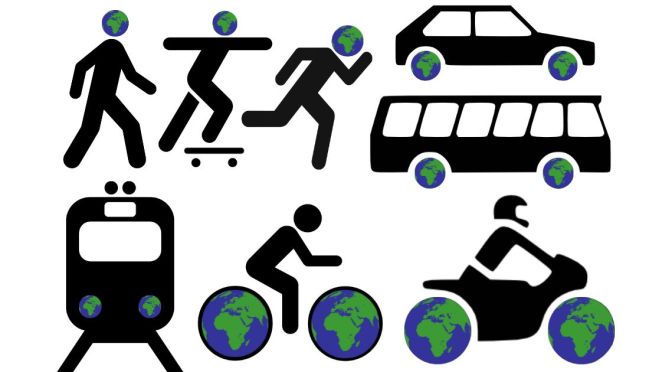
Personal Transport Comparison

Humans are moving all the time. Unfortunately, we seem to be pretty inefficient when it comes to moving ourselves about. One good example is cars. Oftentimes, when we want to go from A to B, we consider the most straightforward means to involve taking over a tonne of metal, plastics, rubber, electronics and soft furnishings with us. This has all been made possible by the internal combustion engine. Because we can move a huge amount a material with no effort, people have become insensible to the fact that using massive vehicles to carry individual human beings (which might weigh less than 5% of the overall load) is MADNESS! Obviously the degree of madness is variable according to where a person is going, what (or who) they need to take with them and multifarious other factors (weather conditions, terrain, personal physical condition, etc). Still, the fact remains, that cars are very rarely the most efficient way of travelling from one place to another.

People are not going to stop moving, so I thought it might be interesting to compare forms of transport to figure out which one’s are the most efficient and effective (in terms of environmental impact, cost and time).

Human-Powered

Walking & Running

Walking and running are as close to zero-emission as I think we can get. The main factors with environmental impacts are probably calories-burned (as increased exercise requires increased calorie-intake) and the comparably-insignificant materials used (namely footwear and attire). The carbon-footprint of your calorie intake depends on a lot of factors (where you live, what you eat, how you source it, etc) which we’re not going to explore here (hopefully in the future), but I think it’s worth noting that “calories burned” is the main environmental consideration when it comes to travelling ‘on foot.’ Technically, it seems running uses more calories per kilometre than walking, but it is faster and, fairly obviously, the degree of difference depends on how fast you are walking (or how slowing you’re running). Also the amount of calories used should be compared to how many calories you would have used anyway during the travel time (through just existing)

Walking/Running carbon footprint : 0.013kg per KM (taken from this blog. There are lots of numbers out there but this seems a reasonably reliable indication).

Speed: Walking approx. 6km/h. Running approx 12km/h. This is clearly very dependant on things like personal fitness, terrain, elevation and overall distance travelled.

Range: I’m not going to put a figure in here. Theoretically, most people could (and arguably do) walk or run indefinitely, with breaks for food, sleep, etc.

Other environmental impacts to consider: Wear on footwear and attire necessary for walking/running in a variety of conditions (unless you live where it’s always sunny, like California USA, or always raining, like Manchester UK). Manufacturing and distributing things, like trainers and clothes has a measurable impact, as does disposing of these things when they get all worn out.

Cycling

Cycling is an incredibly efficient way of getting around. Whilst there is the added weight of a bicycle to consider, this should only be a fraction of the weight of the rider (my 20+ year old road bike only weighs about 11kg, so probably less than 1/7th of my own weight). However, the addition of the bike as a smooth and efficient mode of transport reduces calorie intake over walking or running whilst increasing speed. Cycles are wonderful inventions and which really maximise the speed and range of human-powered travel whilst reducing impact on the body. Furthermore, you can get racks, luggage, trailers and specific cargo-carrying bikes to make them more practical for carrying stuff. In terms of transporting additional small people, you can get child-seats and buggy trailers. You can also improve efficiency by riding a tandem (reducing ‘drag’) or simply by drafting another rider.

Cycling carbon footprint : 0.006kg per KM (again based on increased-calorie-burning, taken from here).

‘Lifetime’ carbon footprint (taking into account the manufacture (etc) of the bike): 0.021kg per KM

Speed: 20 – 25km/h. This can be considerably quicker, especially when riding in a group.

Range: Limitless, but it really depends how much of your day you want to spend on a bike.

Other environmental impacts to consider: Manufacture of bike and wear on components (tyres, chain, sprockets, brakes, etc). The lighter you, and your equipment, are, the less energy used, therefore reducing excess weight, both personally and in terms of bike equipment increases efficiency.

Other human-powered forms of transport

There are other ways of getting around which require an amount of human input. Cross-country skiing, ski- or splitboard-touring are particularly prevalent in some areas during the winter. Outside of snowy areas, people may also use scooters, skateboards, rollerskates or rollerblades, amongst other things, to travel about. As with running, walking and cycling, the primary environmental impacts will be calories burned and equipment wear. Also, similar to the above, the environmental impact is going to be relatively low.

Small electric vehicles

Insofar as single-person electric vehicles reduce reliance on cars (fossil fuel-burning and othewise) they must probably be considered a good thing. Also, where the electricity used is sustainable (from hydroelectric or wind-power for example) there is a definite benefit when compared to diesel, petrol or LPG vehicles. However, it is important to recognise that there is no such thing as ‘free electricity’ and even the most sustainable electricity supply requires a huge amount of infrastructure to operate (which has its own carbon footprint), there is always wastage with electricity and any ‘green’ electric being use to power vehicles is not being used elsewhere. Another problem with electric vehicles is batteries. No battery is 100% efficient (various figures suggest a loss of 20% when charging a battery) and they have a significant environmental impact when being produced and, at end-of-life, (hopefully) recycled. Batteries can also be affected by cold weather (reducing range dramatically as the temperature drops), which can be a consideration.

Electric Scooters

Electric scooters have become very popular, particularly in urban areas (where they are allowed). They are fairly compact, and let people whizz about, door-to-door, with great ease. You don’t need to change your clothes (even in slightly inclement weather) and, with some scooters, give even give a lift to friends. Unfortunately, having done some research, they seem to be ‘not the best.’ In line with other electric vehicles, the carbon footprint of the manufacturing process is quite high for such a small thing. Also, compared to traditional types of public transport (tram, bus, train), they are quite inefficient. I thought that you may be able to improve efficieny by using them partially- or entirely-manually (essentially kicking oneself forward like with a traditional scooter) but that seems to be very difficult to do with most scooters. Hence the electric scooter is an additional, fairly heavy piece of hardware (usually between 10-30kg) that is often only effective when powered entirely by electricity. They are better than cars for one person, because they are smaller, but work in a very similar way.

Electric scooter carbon footprint : 0.06kg per KM (from here)

‘Lifetime’ carbon footprint (taking into account the manufacture (etc) of the scooter): 0.202kg per KM

Speed: Usually 25-30km/h but can be much faster.

Range: Varies, but currently 20-30km per charge seems typical.

Other environmental impacts to consider: The typical issues of electric vehicles such as electricity loss in charging batteries and, particuarly, the carbon-cost of manufacturing.

Electric Cycles

Compared to electric scooters, electric bicycles are amazing. Whilst there is all the same problems with batteries, electric bikes benefit massively from the fact you can ride them like a normal bicycle. This means that, whilst electric bikes are naturally a bit heavier which has a carbon-cost, it is possible to get nearly the same efficiency as a traditional cycle by riding it without electric assistance. The overall environmental impact of an electric bicycle (per km) is therefore largely dependant upon how it is ridden. The possibility of electric power allows practically ANYONE to cycle, on practically any terrain, secure in the knowledge that they don’t have to do it all by themselves. Perhaps, with increased use of an electric bicycle, a person’s fitness would increase, meaning they can ride further or faster with less need for the help of the battery. There are also plenty of bicycle types which have been developed to used the added oompth of electric power, such as cargo-carrying bikes, and bikes with seats for multiple passengers.

Electric bike carbon footprint : Presumably the same as a ‘normal’ bike is possible, so around 0.006kg per KM

‘Lifetime’ carbon footprint (taking into account the manufacture (etc) of the scooter): 0.022kg per KM (from here or here)

Speed: 20 – 25km/h seems reasonable but can be much faster.

Range: Varies massively, with searches throwing up everything from 25 to over 150km. However, riding as a traditional bicycle means the range is essentially infinite…

Other environmental impacts to consider: The typical issues of electric vehicles such as electricity loss in charging batteries and, particuarly, the carbon-cost of manufacturing.

Other types of small electric vehicle

There are single-wheel unicycles and electric bikes without pedals (so more like electric mopeds). These work in a similar way to the more-prevalent electric scooters and will likely have a similar environmental impact. The main modifying factor is, as usual, weight. The lifetime factors will be affected by the longevity of the mode of transport. Essnetially, if it cannot be ridden under pure human power, like a pedal-driven electric bike, it will always be a deadweight moved by electricity.

Motorcycles and Quadricycles

To be continued…

Nightmare November: Part 9

Nope. Another horror film from modern-day marvel of media Jordan Peele, director of the universally-critically acclaimed Get Out (2017), which also stars Daniel Kaluuya. I did see, and enjoy, Get Out shortly after its release, so was hoping for a similar experience.

Nope.

I liked this film. In many ways this makes me want to avoid the ‘horror’ question entirely, but I’m sure it’ll come up. The scenery and general landscape cinematography are really nice. There are some mysterious things going on. The acting’s great and largely believable. The story is quite fun. There are confusing parts and, if pushed, I would say the film was more science-fiction than horror, but that’s what I’ve come to expect this month.

What are the best bits (intentionally-vague slight-spoilers)? The whole ranch setting is good and naturally lends itself to being creepy. The film also harnesses the fear factor of natural weather systems when living in an isolated area, particularly when they become unnatural. Horses are great actors, they really nail either calm or terrified, and are great for heightening the mood of the piece. The film sets up nicely for a climactic ‘showdown’ which all makes sense. The ‘nope’ motif is good, especially as it often contravenes the recognised horror film cliche of going into somewhere, or doing something, which is a blatantly a terrible idea.

What are the worst bits? In no particular order… Not sure what the whole Gordy thing was about; if it was just to create a sinister atmosphere, it seems entirely unnecessary. Not sure why Antlers Holst was there; we all want Michael Wincott in the film but I’m not sure anyone knew what to do with him and he had to make an unjustifiably bad decision just to get him back out of the film again. Also, like many of the characters, he was difficult to listen to. Not sure if this was a sound mixing issue, a problem with the version I watched, or whether the actors were asked to speak in a particularly growly (Antlers), low-key (OJ) or fast-paced (Em) way, but some of the dialogue escaped me. Once we got past the creepy section into the monster section, the monster was not frightening. The ‘guts’ scenes were just (I can only assume intentionally) rubbish.

So more bad then good? No. The film is still good. The horror aspects are not great. It’s not very frightening. There are not a lot of jump-scares. The gore is fairly minimal. The monster is not frightening. The Gordy section is one of the more unsettling aspects although it is so incidental and only tangentially-related as to almost appear like a Twilight-Zone-esque short-story within a story. But the film is good enough.

Surely you’re going to set yourself up with a question that invites a quote-unquote hilarious pun answer? Nope.

Nightmare November: Part 8

I have seen a few Hitchcock films. The Birds, North by Northwest, Rear Window and (possibly, but can’t really rememeber) Vertigo. I had, up until this point, never seen Psycho, although basically know the shower scene (from its regular reference/appearance in popular media) and have, what I wrongly-assumed was, a good idea of the theme tune (from Busta Rhymes).

She might have fooled me, but she didn’t fool my mother..

Psycho is ‘up there’ in terms of horror films (#5 TimeOut, #17 Empire) but, unfortunately, it is still a horror film. Whilst, in all likelihood, a masterpiece of cinema which broke and recreated conventions, it is unfortunately also a horror film (whatever that means). Approaching this from a 21st century viewpoint (SPOILERS incoming and persistent from this point on), I’m probably underestimating the shock value of repeated bloody stabbings, the infectuous corruption of otherwise everyday situations (like visiting a motel,or having a chat), the visuals of a decayed corpse or how an imbalance in a person’s mental health can lead to frightening, otherwise unconscionable outcomes. However, having now watched (what feels like too-) many horror films, Psycho seems to contain many of the things that make the genre a bit… silly. Hitchcock may have actually invented these things, which would be a shame.

What things are you talking about? Breaking into a person’s property is justifiable, even when it is clearly the most inadvisable course of action for the corporeal safety of oneself or others. This specific rule perhaps falls under the wider directive that ostensibly normal people can/should just act plain weird and make bad decisions.

So normal people in Psycho act in unconvincingly odd ways? Exactly. When Marion (played by Janet Leigh) meets a police officer on the road, she acts so suspiciously it’s almost farce. She later acts even more suspiciously when talking to a car salesman practically in front of the same police officer. It is worth mentioning that, following her encounter with the police officer, Marion decides to change cars (presumably to make herself less conspicuous and generally evade said police officer), which she does ‘in a rush’ and to not-insignificant personal expense. Completely illogically, she also does this in direct view of the same police officer.

What are the best bits (intentionally-vague slight-spoilers)? It’s a Hitchcock film, so there is a tense atmosphere, with all the creepy accoutrements that you might want (stuffed birds, imposing gothic mansion, motel (literally) off the beaten path). Anthony Perkins as Norman Bates is loveably/pitiably freaky from the off.

What are the worst bits? All the horror film aspects. The initial murder is ‘horrific’ but, until that point, the film is more of a thriller than a horror. Even following the death, it is difficult to pinpoint when the film becomes a ‘horror’ as such. I’m beginning to formulate some sort of theory that in order to become part of the horror genre, a normal thriller/drama/comedy needs to simply loosen any grip it has on reality or sufficiently abandon logic. Horror is what happens to fill the gaps when a story becomes largely unbelievable.

Horror films are all bad then? Maybe horror is a synonym for bad or at least far-fetched. There are certainly horrific things that can be portrayed in film, but this does not appear to be the threshold for ‘horror’ films as such. What makes them ‘horror’ films seems to be the nonsense which is only incidentally related to the horrific stuff.

Is Se7en (with Morgan Freeman and Brad Pitt) a horror? Exactly. Or is it a crime drama/mystery/thriller?

So are you saying that the horror film Psycho (rated 8.5 on IMDB and largely considered one of the greatest works of Alfred Hitchcock) is bad? No. It’s a good film. It’s a revolutionary film. It has some great acting, tangible creepy atmosphere and a solid, enjoyable twist that 1960s audiences may not have seen coming from a mile off. One could argue that it is hardly a horror film, or that only the weaker elements of it are horror, or that it is a great horror film with weaker parts.

How deep is the swamp? Deep.

Les Arcs – What’s On December 2023

Last updated: 28th November 2023

9th December

First tracks or La Premiere Montee des Arcs is the first (official) opportunity to ski the pistes of Les Arcs. Starting with a hot drink in Arc 2000 at 9am, followed by a quick safety briefing, it is a great opportunity for lovers of ski-touring to ‘skin up’ and take a supervised hike up the mountain for the freshest tracks of the season. An evenement solidaire, this event cost €5 with the money effectively going to charity. After a 4.5km march up to the Col de la Chal, taking in about 645m of ascent, you ski back down for a little bit of lunch. All details are here.

15th-17th December

Bourg Saint Maurice Christmas Market starts on the Friday evening and lasts all weekend. There are offerings from various local artisans and a variety of events occuring (the arrival of Father Christmas at 15:30 on Saturday probably the highlight).

16th-23rd December

Coinciding with the opening week of the ski season, the Les Arcs Film Festival (previously the festival de cinéma européen des Arcs) was founded in 2009 and has rapidly become one of the leading lights celebrating European independent cinema (it has even been described as a “European Sundance” by Variety magazine!) Showcasing a wide variety of feature and short films across multiple locations in Les Arcs, the festival not only awards excellence and innovation, but aides further development through an industry village, workshops and events which bring together the “movers and shakers” from the world of European film. With passes available allowing unlimited viewing for the whole week from €34, weekend passes for only €16, and tickets for individual showings on sale, the film festival is a great way of enjoying great cinema and great snow in the same place.

Nightmare November: Part 7

One Cut of the Dead. A Japanese Horror-Comedy. Or maybe horror/comedy. Essentially it’s a low-budget zombie flick until it isn’t, at which point it goes from ‘meh’ to AWESOME!

This work will become a masterpiece.

Like all horror films (in my experience so far) this film is not scary in the slightest. The horror is quite formulaic, a bit chaotic and generally basic. There are loads of things that make you think “yes, this is a horror film” and many of them are down to the amateurish feel and the histrionics of the actors. However, unlike all horror films (in my experience so far) this one gets good. Really, really good. Not for ‘horror’ reasons particularly, but who cares?

So what happens that makes it so good? Unfortunately I can’t tell you, and you shouldn’t look it up. It is best watched. Similar to a twist ending, the realisation that something else is happening is very rewarding. I’ve already said too much. Suffice to say the whole thing is a joy, and even the final credits manage to add a layer of awesomeness to the story.

What are the best bits (intentionally-vague slight-spoilers)? One of the minor triumphs is the eponymous “one-cut” part of the film. You have to love an epic single shot, like in Boiling Point with Stephen Graham. Also, practically everything that happens in the film after the thematic ‘half-way point.’

What are the worst bits? You feel like you’re persevering a little bit at the start. It seems to be just another horror film (i.e. a bit rubbish and pointless), before it’s not.

Should I go and watch it now? Yes. Go now. Find it. Watch it. It’s great.

Horror films are not all bad then? That really depends if One Cut of the Dead is actually a horror film. It’s not NOT a horror film. But if this exercise has given me anything, it has been this film, so arguably worthwhile overall. It deserves every tenth of its 7.6 IMDB rating.