
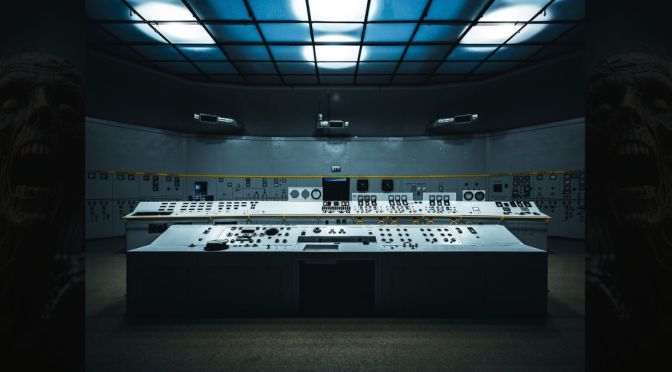
The Cabin in the Woods (2011). A film whose starting point is very definitely The Evil Dead (and, I presume, The Evil Dead 2). It’s a very modern take on the stranded-group-of-young-people slasher flick. Trying to be as obscure as possible to avoid spoilers, there are larger, corporate forces at play when it comes to the systematic murder of the main characters.
Unlike the very many films from which it is derived, Cabin is high-budget, polished, well-scripted and populated by decent actors. Directed by Drew Goddard, written by Joss Whedon, stars Richard Jenkins, Sigourney Weaver and Chris Hemsworth… and it’s not like it’s their first film. It’s great. There are many great moments. The whole premise is super fun. The gore (whilst very well done) is incidental and therefore not the whole film. I did well to watch this towards the end of the month, as it directly and indirectly references all kinds of scenes and tropes from horror movies.
Good work, zombie arm.
What are the best bits (intentionally-vague slight-spoilers)? The very many explanations for the otherwise illogical things that happen in horror films. The betting whiteboard (particularly, following yesterday’s film, the ‘Angry Molesting Tree.’) The way the opening title appears in a classic ‘jump scare’ way, whilst apparently humdrum things are occuring on-screen. The fact it takes a very self-referential genre and turns the ‘meta’ up to 11.
What are the worst bits? Can’t really think of any. Maybe that you have to watch lots of truly awful schlock-horror to get the in-jokes. This means I’ve probably missed lots of in-jokes.
So it follows the modern trend of being meta then? Yes. And no. This is another thing I’ve probably not explored enough with horror. Horror films are a relatively closed shop, in that they really take their cues from what’s come before. Horror films seem unable to exist without referencing other horror films. I’m not sure if that is because there’s a shallower pool of resources to work with when trying to make things frightening or shocking, or if a rudimentary knowledge of what has passed before (effectively a basic understanding of film studies) is a general requirement for horror audiences. Maybe people who watch horror, watch horror and people who don’t, don’t, meaning that the audience is in some ways part of the film. The success of horror films relies on a previous knowledge of horror films. This might not be true, as the idea that “the more you put in, the more you get out” applies to practically everything. However, I’m pretty sure I’ve seen more recurring themes and direct call-backs to other movies in this month of morbid madness that in other films of different genres. Also, the use of certain actors in horror films seems to be a way of validating the horror ‘positioning’ of a film. Despite having made all kinds of films, placing someone like Jamie Lee Curtis (or Sigourney Weaver) in a horror film makes it somehow more bona fide. The Cabin in the Woods is therefore a great film, knowingly employs a vast selection of tropes (everything from “do not read the latin” to the reasons for the gratuitous nudity) and is traditionally horror in it’s referential nature.
 XIST
XIST 